

Ready to Grow?
Get Shalom Macon teachings anywhere, anytime!
Latest Teaching:
There’s Still Time
This teaching looks at cheshbon hanefesh through an unlikely lens from English literature. It’s not written by a Jew, was not written about Elul, and is not read anywhere near the fall. We are going to use it anyway to help us understand the difference between being forgiven and being formed. Last Shabbat of Elul. The shofar has not sounded. There is still time.
Listen up!
Do you prefer audio teachings? Subscribe to the podcast
through these channels:




Recent Messages
-

There's Still Time
This teaching looks at cheshbon hanefesh through an unlikely lens from English literature. It’s not written by a Jew, was not written about Elul, and is not read anywhere near the fall. We are going to use it anyway to help us understand the difference between being forgiven and being formed. Last Shabbat of Elul. The shofar has not sounded. There is still time.
-

Is Your Faith Short-Sighted?
Have you ever looked at something familiar from the wrong perspective and failed to recognize it? Sometimes our spiritual lives become just as blurry. When our attention is fixed only on work, finances, relationships, responsibilities, and the crises directly in front of us, we can lose sight of the bigger picture. Our identity becomes unclear. Our purpose fades. Even our faith can become short-sighted. In this message, we explore the connection between stereograms, macro photography, the firstfruits declaration in Ki Tavo, and the way Yeshua continually directed His disciples toward the coming Kingdom. What happens when the temporary becomes more vivid to us than eternity? What does teshuvah have to do with regaining our spiritual focus? And how can the sound of the shofar help us turn our attention back toward Hashem, His Kingdom, and the return of our King? Elul is a season of preparation—a time to examine where we have placed our focus and make the necessary adjustments. Are you living only for what is directly in front of you, or are you preparing for what is yet to come? Is your faith short-sighted?
-
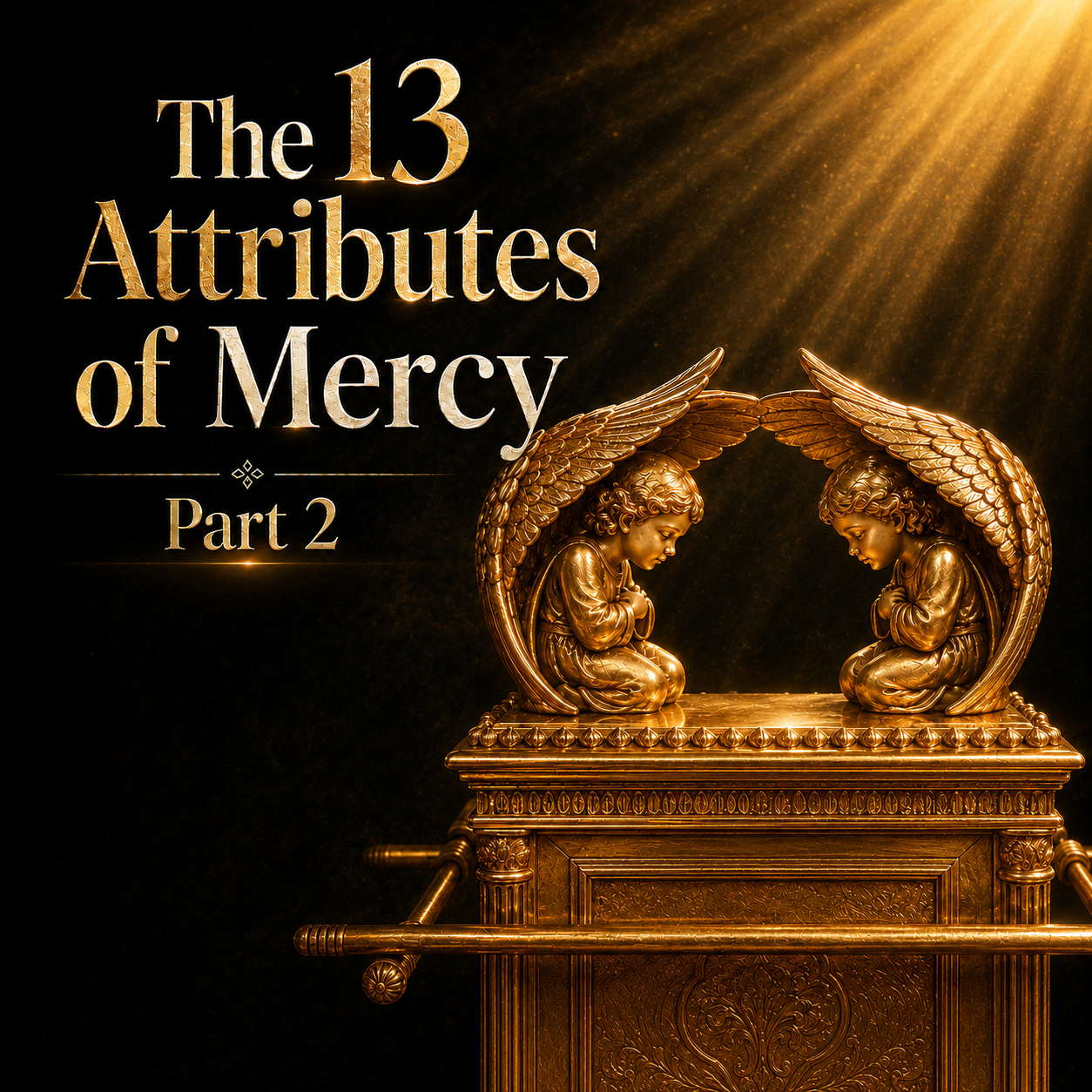
The 13 Attributes of Mercy: Part 2
What if mercy means more than forgiving someone who hurt you? In Part 2 of our study through the 13 Attributes of Mercy from Tomer Devorah, we explore the final six attributes—and discover that biblical mercy reaches far deeper than simply overlooking an offense. What does it mean to suppress another person’s sin instead of publicizing it? Can we truly forgive someone if we still feel compelled to tell others what they did? What happens when someone who harmed us finally suffers the consequences of their actions? And how should we treat people who have fallen short when they are still descendants of Abraham, Isaac, and Jacob? Drawing from Micah 7, the teachings of Yeshua, Zacchaeus, Cornelius, the prodigal son, and the cherubim over the mercy seat, this teaching challenges us to see people beyond their worst moments. Perhaps the deepest level of mercy is learning to look at someone again—not as the person they became, but as the innocent child they once were. Can we show mercy to others before we learn to show it to ourselves? Watch Part 2 of “The 13 Attributes of Mercy” and discover how Hashem calls us to forgive, restore, protect dignity, and remember the good.
Sermon Series
Don’t know where to start?
This series will introduce you to Jesus in His Jewish context.

The Jewish Jesus
It sounds so simple and obvious: The Jewish Jesus. But this essential truth has been lost to nearly all of his followers. Why has the Jewishness of Jesus been downplayed or even denied throughout a large part of history? Why is this one simple fact critical to our relationship with him?


